Showing posts with label Aeroflot. Show all posts

Big changes in store at Aeroflot

Big changes are happening over at Aeroflot - a new CEO, no more Russian jets, better in-flight service, and a plan for a slimmer company (as well as slimmer flight attendants). And if you have a complaint, simply email the CEO himself.

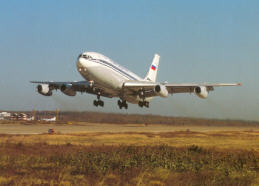
By the end of this year, all of the airline's Tupolev Tu-154s - previously the backbone of the medium-haul fleet - will be retired, replaced by Airbus A320 family aircraft. The airline also has retired its Ilyushin Il-86 fleet (to be replaced by three leased MD-11s), leaving the Ilyushin Il-96 as the sole Russian type left. Aeroflot has been itching to get rid of those for a long time, as they're rather expensive to operate. The Il-96s will leave the fleet by October, along with the Tu-154.

Meanwhile, the airline, like most others, is struggling to cut costs. CEO Savelyev revealed in an interview with the Russian business paper Vedomosti that 40% of the airline's routes are unprofitable, with the worst being Moscow-Los Angeles, losing $14 to $21 million a year. "But we aren't looking at abolishing the route," he said, stating that the airline is closely reviewing all costs and is planning on making money on the route by June 2010. "If there's demand and good capacity, then why dump it?" The airline is also seeking to slim down, and plans to trim 6,000 of its 15,000 employees. "This number doesn't come from the ceiling," said Savelyev. "We invited the international consulting firm Bain to develop a new corporate structure... The optimal ratio is 1 million passengers for every 1000 employees. In 2008, Aeroflot carried 9.2 million passengers, so the company should have just over 9000 people."

The size of the company itself isn't the only thing that Savelyev wants to make narrower; he's set his sights on the airline's flight attendant corps. “These will be very eye-catching, very striking girls,” he says in the Moscow Times, which reports that they will not exceed a Russian size 48 (US, 12 to 14). New uniforms are also in the works, with orange on the way out: “A sociologist told us that, unfortunately, the color of our old uniforms was a repulsive color, that it made passengers nervous." His son, studying in England, sent him a video of Virgin Atlantic flight attendants (seen here on YouTube); "in bright red they look like professional models," he said. In-flight service is also looking to get a much-needed overhaul; apparently a Singapore Airlines hospitality trainer flew on a couple of Aeroflot flights to judge the service. “We scored a C plus or a B minus," said Savelyev, "but the good news is that our mistakes are easily correctable."

The familiar hammer-and-sickle logo will still be around, though - Savelyev has said that he "likes" the "bird with the hammer and sickle." Back in 2003, when the airline introduced its current color scheme, branding experts suggested that the airline drop the logo since it carried rather negative connotations. The first planes to get the new livery actually flew around for awhile with the logo applied as a sticker, so that airline management could get rid of it if desired. But the hammer and sickle wings are so synonymous with Aeroflot that the airline decided that they might as well be retained, the last vestige of the airline's Soviet past. Things have changed - for example, customer service. "As for all of the complaints," said Savelyev, "passengers can write to my email address, which is listed in the Aeroflot in-flight magazine.

photo by Aleksander Markin from Flickr, licensed under the Creative Commons

S7 Airlines to join oneworld alliance

photo courtesy S7
Russian carrier S7 (formerly known as Siberian Airlines) has announced today that it will officially join the oneworld alliance next year. British Airways has 'sponsored' the airline, which is Russia's largest domestic airline and a large player on international routes, too. S7 recently switched to an all-Western built fleet (no more smoky Russian jets) and is quickly expanding. Willie Walsh, CEO of British Airways, released a boilerplate statement with the usual "S7 is a perfect fit for oneworld," etc., etc., but also said that "oneworld's priority is the quality rather than quantity of member airlines." That's probably a subtle dig at oneworld rival Star Alliance, which is at least twice as large in terms of number of airlines. But perhaps when it comes to Russia, Walsh needn't be worried. The S7 announcement leaves Star as the only alliance without a significant presence in Russia (Aeroflot is a member of SkyTeam).

And speaking of Star, Greek carrier Aegean Airlines will become a full member of the alliance next year.

Farnborough Airshow Review, Days 1 and 2

The Farnborough 2008 Airshow, which runs from July 14 to 20, is the first major airshow to be held since the Paris Air Show last June. Boeing VP Randy Tinseth pointed out on his journal a few ways that the aviation world has changed since the Paris show:
  • There have been 2,678 commercial airplane orders (Boeing and Airbus)
  • Oil has gone from $67/bbl to $134/bbl
  • Jet fuel has gone from $2.12/gal to $3.92/gal
  • The U.S. dollar has gone from 0.75 euros/dollar to 0.64 euros/dollar, and from 123 yen/dollar to 107 yen/dollar
  • The market has continued to liberalize with “open skies” between the EU and the U.S.
  • And worldwide aviation traffic continues to grow
The economic situation that the airline industry's in has only gone downhill since last year, so some expect that, as a result, there will be fewer orders announced at this year's airshow. So here's a quick summary of the orders placed from days 1 and 2 (July 14 and 15). It should also be noted that Airbus tends to "save up" announcing orders until airshows, while Boeing tends to announce them on a more regular basis.

Boeing

  • Dubai-based low-cost startup FlyDubai ordered 50 737-800s, worth $3.74 billion at list prices.
  • Ethiad Airways ordered 35 787-9s and 10 777-300ERS, worth $9.4 billion.
  • Nigerian airline Arik Air announced an order for seven more 737s.
Airbus
  • Aeroflot ordered five A321s.
  • Dubai-based Aircraft lessor DAE Capital ordered 30 A350-900s and 70 A320s.
  • Aviation Capital Group ordered 23 A320 family aircraft.
  • Tunisair ordered three A350-800s, three A330-200s and ten A320s.
  • Qatar Airways ordered four A321s.
  • Ethiad Airways ordered 20 A320s, 25 A350 XWBs and 10 A380s.
  • Saudi Arabian Airlines ordered eight A330s.

Branson to start Virgin Russia

The man that brought you Virgin Atlantic, Virgin America, Virgin Blue, Virgin Nigeria and others is preparing to do it again.

Billionaire Richard Branson has announced plans to start an airline in Russia, tentatively called Virgin Russia. He plans to take advantage of the oil-fueled Russian economy, which has given the average Russian more money (and an airline market that's growing at around 10 percent a year). "We hope to offer the Russian people a really good airline. We may be able to do it a little better than is being done at the moment," said Branson. "We're in discussion with two or three partners." Branson also noted that there are "150 million people here within a three-hour flight from Moscow."

Branson certainly faces some challenges in his new endeavor. He'll be taking a swipe at state-run carrier Aeroflot, and is seeking "two or three" Moscow-based local carriers to team up with him, although he has said that his partners don't necessarily have to be airlines - "what we are looking for is people we can trust, people we could work with," he said. The Moscow Times identified several possible partners as Russian startups SkyExpress and Red Wings.

And Aeroflot is currently dominant in Moscow, which isn't planning that to change. Aeroflot Deputy CEO Lev Koshlyakov said that the "Russian market is competitive and is attracting more and more interest, with various business models... A new player coming in will make everyone mobilize their resources." And Aeroflot CEO Valery Okulov asked, "Why should we fear competition? We have always struggled with competition, so what do we have to fear?"

The Russian government also has to be dealt with. It has been notoriously hostile to certain foreign investment (e.g. some oil projects), and although there's no indication that the government would block a Virgin investment, Branson should definitely keep this in mind.

Aeroflot retires Tupolev 134


First off, happy new year! It's been a while since my last post, so here's a short story that might be of interest: Russian carrier Aeroflot retired the Tupolev Tu-134 on Monday, December 31, with a flight from Kaliningrad to Moscow. The 14-strong fleet of 134's will be replaced by Airbus A319s and A320s, as well as the Sukhoi Russian Superjet-100 (starting in late 2008). It's too bad that the Soviet aircraft are being retired, since they provide a nice contrast to the rather boring stream of short-haul Boeings and Airbuses that are so common nowadays. But the Soviet models are rather noisy and polluting (the Tu-134 was banned from flying to Europe since 2002 for this reason). I'm not sure when the rest of the Soviet planes in Aeroflot's fleet will be retired (the Tu-154 is the main model left), but I've heard rumors that it will happen before 2010.

United international route rumors

photo: "N646UA", by Drewski2112

There have been a few rumors floating around that United Airlines might start some new international routes. Among them:
  • Chicago - Moscow. Aeroflot used to fly this route but stopped in 2001, and United holds the dormant route authority for the route, which it obtained in a deal with Pan Am back in 1991. (If United did fly this route, it would probably skip Moscow's Sheremetyevo Airport (SVO) and instead fly to Domodedovo Airport (DME) because its fellow Star Alliance carriers fly there.) But the US-Russia market is currently served by a lot of routes - Delta flies Moscow - Atlanta and Moscow - New York (JFK), and Aeroflot flies Moscow - New York (JFK), Los Angeles, and Washington (IAD).
  • Chicago - Milan. If United did fly this route, it would compete with Alitalia.
  • Chicago - Düsseldorf. United used to fly this route but stopped in 2001. Star Alliance partner Lufthansa flies it with an Airbus A319, but is supposed to upgrade the route to an Airbus A330 in May.
It has also been rumored that United would upgrade some of its Boeing 767-300s, including a switch from a two-class domestic configuration to a three-class international one, and an engine upgrade. These upgraded 767s would be used on the route.

AiRUnion moves towards Star as S7 joins oneworld

Lufthansa announced on Wednesday that it will begin codesharing with the Russian airline alliance AiRUnion, which is made up of the carriers Domodedovo Airlines, KrasAir, Omskavia, Samara Airlines, and Sibaviatrans. The deal will help Lufthansa, which serves eight cities within Russia, create domestic connections. Likewise, the AiRUnion carriers will have access to Lufthansa's international network.

While the deal doesn't make AiRUnion a member of Star Alliance, of which Lufthansa is a founding member, it does move the Russian alliance closer to Star. AiRUnion already codeshares with Star carrier Austrian Airlines on the Moscow-Vienna and Krasnoyarsk-Vienna routes.

Novosibirsk-based S7 Airlines, Russia's number-two carrier, also announced a few weeks ago that it was in talks with British Airways to join the oneworld alliance. Aeroflot, the country's largest airline, is already a member of SkyTeam. So because there are three major airlines/groups in Russia (Aeroflot, S7, AiRUnion) and there are three major world airline alliances (SkyTeam, oneworld, Star), it would make sense that AiRUnion will probably become a Star member in the coming months.

Aeroflot says 'nyet' to Alitalia

photo courtesy albspotter

Russian carrier Aeroflot has withdrawn from the bidding process for Italian airline Alitalia, ending months of speculation of a possible takeover. In a press release, Aeroflot said, "Aeroflot believes that acquiring Alitalia under the current conditions would not be the right decision for it to take."

According to the airline, two reasons that led to the decision were the fact that Aeroflot did not get access to "critical information" regarding the "commercial and operational aspects of Alitalia’s business to confidently formulate a well supported business proposal to successfully restructure Alitalia". Another reason: "The conditions and requirements outlined for the privatization process would significantly limit the ability of Aeroflot to implement what Aeroflot believes to be the necessary measures to re-launch Alitalia."

This leaves Lufthansa-backed Italian carrier Air One as the only airline left in the bidding as of now.

Paris Air Show, Day 3

Airbus has completed another order-filled day at the Paris Air Show, eclipsing rival Boeing yet again in terms of orders. Here's a wrap-up:

United Arab Emirates-based Etihad Airways purchased twelve Airbus wide-bodies, dividing the order between five A330-200s, three A330-200Fs, and four A340-600s. The order provides a bit of a boost for the A340 program, which has seen few orders recently.

As mentioned yesterday, Aeroflot bought five more A321s, as well as ten more A330-200s (which will be leased) and also placed a firm order for 22 A350s, which it had committed to back in March. Aeroflot will be relatively unique in that it will be operating both the A350 and its arch-rival, the Boeing 787.

Mumbai, India-based Kingfisher Airlines, which has been growing rapidly, has signed a Memorandum of Understanding (MoU) to buy up to 50 Airbus planes. The agreement is for 15 A350-800s, 10 A330-200s, 5 A340-500s and 20 A320 family planes.

Two carriers from Libya also placed orders with Airbus today. Afriqiyah Airways placed a firm order for five A320s and signed a MoU to acquire six A350s, with delivery starting in 2017. Libyan Airlines also signed a MoU to buy four A350s, four A330-200s and seven A320s, allowing the airline to modernize its fleet of aging planes.

Yekaterinburg, Russia-based Ural Airlines signed an MoU to purchase five A320s that will allow it to phase out the old Tupolev Tu-134s and -154s that it currently operates on short-to-medium range routes. The airline already operates two leased A320s.

Leasing company CIT Aerospace signed a firm contract for seven A350s and 25 A320 family airplanes.

Turkish cargo operator MNG Airlines placed a firm order for two A330-200Fs, proceeding with the MoU that it signed in January for the planes. MNG, which operates a fleet of A300Fs and F-27s, is seeking to fly to long-range destinations with the new planes.

A subsidiary of Aircastle Limited, a company that leases planes to passenger and cargo airlines, has signed a contract to buy fifteen A330-200Fs.

And the air freight company Flyington Freighters placed an order for six more A330-200Fs. The cargo airline was the first to purchase the A330-200F and will be the first to operate it.

Boeing, on the other hand, only really had one order to announce: Air France will buy nine 777-300ERs and KLM will get seven 737-700s. (Technically it's two orders, but Air France and KLM are two airlines, one company.) The order has a value of $2.7 billion at list prices. This is the first time that the two airlines have bought airplanes together, and it highlights their different fleet strategies: KLM is going Boeing for short-haul while Air France has Airbus airplanes for short-haul and mostly Boeings for long-haul.

Once again, Airbus has come out way on top in terms of orders placed. Boeing's order is important - Air France and KLM are important customers for both manufacturers. But Airbus certainly has stolen the show here with the orders that seem to just keep coming and coming. Even though 'saving up' orders for the air show is a tried and true Airbus practice, it is one that attracts a lot of attention.

Aeroflot buys A321, IL-96


Russian carrier Aeroflot has announced that it has signed a contract with Airbus to purchase five Airbus A321s. It has not yet said when the planes would be delivered or how much the airline paid for them.

Separately, Aeroflot has also stated that it will buy six IL-96-400s. Russian First Deputy Prime Minister Sergei Ivanov expressed yesterday his hope that "a contract for the purchase of six such planes for Aeroflot will be prepared before long". The contract for the airplanes will be signed tomorrow when Ivanov visits Voronezh, Russia, where the IL-96 is built.

Aeroflot orders Boeing 787

Russian carrier Aeroflot announced today that it will be ordering 22 Boeing 787 aircraft - an order valued at about 3 billion dollars. Aeroflot is the second Russian airline to order the 787 - S7 was first. The airplanes, which are scheduled to be delivered between 2014 and 2016, will complement the 22 Airbus A350 aircraft that Aeroflot bought in March. There have been reports that Aeroflot preferred the 787 over the A350 but ended up getting both because state-owned Vneshtorgbank bought 5% of Airbus parent EADS last year.

Boeing emphasized the benefits to Russia that the deal would provide: key components for the 787 were designed at Boeing's Moscow office, where the company employs about 300 engineers, and that Russian titanium would be used in the building of the airplane. Boeing also agreed to help Russian manufacturer Sukhoi in the latter's production of the Sukhoi Superjet-100 (SSJ), also called the Russian Regional Jet (RRJ).

Aeroflot lets 787 slots expire, retires Il-86

Russian flag carrier Aeroflot lost twenty-two production slots last week for the Boeing 787 aircraft because the government wouldn't approve its order. "The original conditions on the contract have expired... We will now be looking for other alternatives. We remain in contact with Boeing," said Aeroflot Deputy CEO Lev Koshlyakov.

Originally Aeroflot remained undecided between the A350 and the 787 and seemed like it would split its order both ways. Alexander Lebedev, owner of 30% of Aeroflot, cut a deal with Boeing to give it the production slots basically as a time extension so that Aeroflot's board could confirm the order, which it has yet to do.

Aeroflot also announced last month that it plans to retire the Ilyushin Il-86 from service later this month. Aeroflot's Deputy Director General Igor Desyatnichenko said that the planes will be retired November 15, and that they were "too costly to keep them through the winter and fly just two or three months in the summer". He also said that the planes, which aren't very fuel efficient, didn't meet European environmental and noise regulations.

The Il-86 was introduced in 1980 and was the first Russian wide-bodied airliner. Aeroflot and other airlines have used (and continue to use) the aircraft on tourist flights to southern resort towns in the Caucasus during the summer months.